

This is the first military execution in the US since 1961 and the first execution of a service member by firing squad since 1945
A plan that revives images from the darkest pages of military history is at the center of international discussion in the US, as the administration of Donald Trump pushes forward the execution of Nidal Malik Hasan, the American service member convicted of the deadly 2009 attack at Fort Hood, Texas.
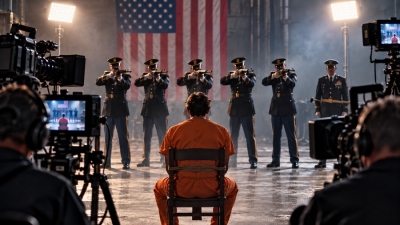
The execution has been scheduled for December 3, 2026, by firing squad, while the Pentagon has announced that it plans to broadcast it live. If carried out, it will be the first military execution in the US since 1961 and the first execution of a service member by firing squad since 1945, opening a new, highly controversial chapter in the application of the death penalty by the American armed forces.
Unusually harsh execution
The US is one of the few developed Western democracies that still applies the death penalty, carrying out dozens of executions each year. However, even by American standards, the execution scheduled for December is unusually harsh.
Secretary of War Pete Hegseth has stated that Major Nidal Malik Hasan, who was sentenced to death in 2013 by a general court-martial under the Uniform Code of Military Justice (UCMJ), will be executed by firing squad at Fort Hood, Texas, and that the execution will be public.
Subsequently, the Pentagon announced that it will broadcast the execution live via the internet.
It was at Fort Hood, Texas, that Major Hasan opened fire inside a crowded medical readiness center at the military base in 2009, killing 13 people and wounding 32 others.
Before opening fire on unarmed soldiers, Hasan shouted «Allahu Akbar» («God is great»). He also shot soldiers in the back as they attempted to escape toward the parking lot.
Later, Hasan stated that he acted in this manner to prevent soldiers from deploying to Afghanistan and killing his fellow Muslims.
The case will mark the first military execution in the US in more than 60 years, the first military execution by firing squad since World War II, and the first officially live-broadcast execution in the world.
The last time the American military carried out an execution was in 1961, when Army Private John Bennett was executed by hanging.
What happened with Private Eddie Slovik
The last time the American military carried out a death sentence by firing squad was in 1945.
The most widely known case is that of Private Eddie Slovik, who was executed by a 12-man firing squad in France in January 1945 for desertion. He was the only American soldier executed for desertion during World War II and since the American Civil War.
Nearly ten months later, in November 1945, Dan J. Lee was executed by an American military firing squad in the Philippines for murder and/or rape.
Consequently, Hasan may become the first American service member to be executed by firing squad in more than eight decades. His execution could also constitute the first death penalty case in the world to be officially broadcast live via the internet.
From public executions of the Middle Ages... to live broadcasting
Public executions were a common phenomenon during the Middle Ages.
In his work «Discipline and Punish», the French philosopher Michel Foucault describes the death penalty as a «spectacle».
«Public torture and executions of criminals were among the most popular spectacles in 18th-century France», Foucault wrote in his book. Gradually, however, most countries banned public executions.
The United Kingdom abolished them in 1868 with the passage of the Capital Punishment Amendment Act 1868, which moved all executions behind prison walls.
France followed in 1939. In the US, the last public execution took place in 1936.
According to the report by Amnesty International on executions in 2025, the organization was aware of at least 17 cases of public executions: 11 in Iran and six in Afghanistan.
The US is thus joining a small group of countries, such as Iran and Afghanistan, where public executions still take place.
It is worth noting that the US is currently at war with Iran and waged a 20-year war in Afghanistan from 2001 to 2021.
The question, then, is what exactly Washington hopes to achieve by joining the same group as its adversaries.
Live broadcast of execution by firing squad
It is worth noting that the general court-martial, under the Uniform Code of Military Justice (UCMJ), sentenced Hasan to death in 2013. Subsequently, military appellate courts upheld the sentence. The US Supreme Court declined to review the case in 2025.
In October 2026, Secretary of Defense Hegseth recommended execution by firing squad, and the president, Donald Trump, approved the recommendation. Later, Hegseth stated that the execution will be public, with the Pentagon clarifying that it will be broadcast live via the internet. Hegseth himself explained part of the rationale behind the decision.
«Execution by firing squad. Army Major betrays his country. Radical Islamist kills a bunch of Americans at Fort Hood. Of course we are going to do it at Fort Hood and we are going to do it on a Thursday. It will happen at one in the afternoon, the time he did it, and it will be soldiers with rifles who make up the firing squad», Hegseth said in an interview with Jack Posobiec on the Real America’s Voice network.
«It was an attack by a radical Islamist who was wearing a military uniform and attacked within the ranks of the military. Therefore, he will be executed by a military firing squad, exactly as it should be. And we will ensure that the world can watch the execution, that it will be public, because people need to understand that there are severe consequences for such actions», he added. «Army firing squad for convicted terrorist Nidal Malik Hasan, the jihadist who opened fire on unarmed American soldiers at Fort Hood in 2009. He killed 13 people and wounded 32, shouting «Allahu Akbar» during the attack», stated Sean Parnell, chief spokesman for the Pentagon.
These statements make clear that the Pentagon seeks to send a strong message against insider threats and reaffirm the supreme authority of the Uniform Code of Military Justice.
It is worth noting that while theoretically the UCMJ has the authority to impose the death penalty for criminal acts in the armed forces, in practice the imposition of the sentence and its actual execution have exhibited a long and complicated history.
The UCMJ and the death penalty
The UCMJ is the federal penal code and criminal justice system governing the armed forces of the US. It was enacted in 1950 and took effect in 1951.
The code establishes a uniform system of military justice for all branches of the armed forces. Its provisions apply to active-duty members of the US Army, the US Navy, the US Air Force, the US Marine Corps, the US Coast Guard, and the US Space Force, as well as to certain reservists on duty and other categories, such as prisoners of war or military retirees.
Its stated objective is to promote justice, maintain order and discipline, support the efficiency and effectiveness of the armed forces, and, by extension, enhance national security.
At the same time, it seeks to balance the military's need for discipline and operational readiness with procedural safeguards for defendants. It includes articles defining strictly military offenses, such as desertion, absence without leave, insubordination, and contemptuous behavior, as well as common criminal offenses, such as murder, theft, and sexual offenses.
General courts-martial operating under the UCMJ have the authority to impose the death penalty. From its enactment in 1951 until 1961, the US Army carried out ten executions imposed under the UCMJ, all by hanging.
The last military execution in the US took place in 1961, after being approved by President Dwight Eisenhower.
However, in 1972, the US Supreme Court, with its landmark decision in Furman v. Georgia, effectively imposed a temporary nationwide moratorium on the death penalty.
In 1984, President Ronald Reagan signed an executive order establishing detailed rules for trials of military cases that could lead to the death penalty.
The order stipulated that the court-martial could not sentence someone to death simply because the crime was serious. Prosecutors had to prove the existence of at least one additional aggravating factor, such as the murder of more than one person or murder in the course of a robbery.
Furthermore, the panel of members could impose the death penalty only if all members agreed both on guilt and on the sentence.
With these rules, the death penalty returned as an available option under the UCMJ. From 1984 to the mid-2000s, the military sought the death penalty in 47 cases.
However, courts-martial ultimately imposed the death penalty in only 15 of those 47 cases. Even in those 15 cases, many sentences were later reduced to life imprisonment upon appeal or commuted by clemency.
For example, former President Barack Obama commuted in 2017 the death sentence of Dwight Loving to life imprisonment, which had been imposed in 1989.
Today, four men remain on death row under the UCMJ: Ronald Gray (1988), Hasan Akbar (2005), Timothy Hennis (2010), and Nidal Hasan (2013).
It is worth noting that former President George W. Bush approved the death sentence of Gray in 2008, becoming the first American president after Eisenhower, in 47 years, to approve a death sentence imposed under the UCMJ.
However, a federal judge stayed the execution so that Gray could challenge his sentence in court. His execution has not been carried out to date.
Trump has now become only the second US president to approve a death sentence imposed under the UCMJ in a period of 65 years.
The execution of Hasan has been scheduled for December 3.
It is worth noting that President Trump not only approved Hasan's death sentence, but also his execution by firing squad and its live broadcast.
The execution of Hasan could, therefore, signal the return of military executions in the US after more than six decades.
www.bankingnews.gr







Σχόλια αναγνωστών